Match-3 Strategy: How to Set Up Bigger Combos
In this guide
Match-3 games are easy to play badly. Swap two pieces, line up three, repeat, and you will clear plenty of boards. But the levels that stop you are the ones where you have a limited number of moves and a specific goal, and there, the difference between a lucky player and a good one is how they set up their matches.
This guide is about the habits that make a match-3 level easier: reading the goal first, choosing where on the board to play, building special pieces and spending moves and boosters wisely. These are general tips for the genre, and each game has its own details.
Read the level goal before you touch the board
Every level asks for something, and the goal changes what a good move is. A level that wants a high score rewards big combos. A level that wants you to collect a certain item rewards matches that clear that item, even if they are small.
Games in this style say it plainly. Candy Rain 8 points out that catching waffles needs different moves from chasing a high score, and Hawaii Match 5 warns that an impressive move that ignores the target is wasted. Take two seconds to read the goal, then plan around it.
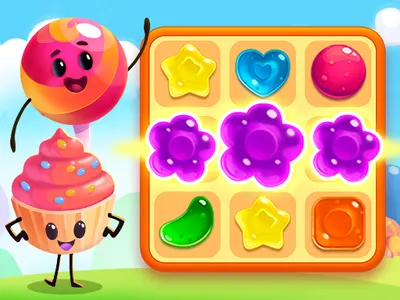 Candy Rain 8 The eighth helping of a much-loved match-3 series, with more candies, waffles and coin chests. Play Candy Rain 8
Scan the whole board before each move
The first match your eye finds is rarely the best one. Before you swap anything, look across the whole board for the match that does the most. A four-in-a-row or a five-in-a-row is easy to miss if you only look at one corner.
It helps to get into the habit of scanning for the larger shapes first, since those are the ones that create special pieces, and only settling for a plain three when nothing bigger is available.
Why playing near the bottom is usually smart
In most match-3 games, pieces fall downward to fill the gaps left by cleared ones. A match near the top of the board shifts only a few pieces. A match near the bottom shifts everything above it, and that can create new matches without any effort from you, often called cascades.
So when you have a choice, lean toward matches in the lower part of the board. You will get more movement for the same single move, and more free combos. The trade-off is that it is harder to predict what will fall, so near the top of the board you have more control over setting up something specific. When you have a particular goal in mind, a top-of-board match can be the more precise choice.
Four and five in a row make special pieces
The biggest idea in the genre is that larger matches give you something extra. In many games, lining up four creates a special piece, and five creates a stronger one. Hawaii Match 5 is built around this: it describes earning boosters and power-ups from four or more, and some level goals ask you to form rows of five or more.
My Little City works the same way in its own theme. Bigger matches hand you building tools such as a sledgehammer, dynamite or a paint bomb, which clear tiles in bulk. Look for chances to line up four, since the item that creates can spare you many ordinary moves.
 Hawaii Match 5 Island match-3 with thousands of levels, where lining up five or more is the move that matters. Play Hawaii Match 5
Combining special pieces
In most games of this type, special pieces get more powerful when they are used together. Two of them swapped next to each other can set off a much bigger effect than either on its own. Hawaii Match 5 mentions explosive bonuses from combining symbols, and Candy Rain 8 gives boosters and combos a lot of the heavy lifting on harder boards.
That suggests a habit: do not use a special piece the moment it appears. Hold off until it is beside another special piece, or beside whatever your goal needs. A booster used in a crowded part of the board that matches your target is worth many times one used on an empty patch.
Managing a limited move count
When a level gives you a fixed number of moves, every move is a resource. Early on, it can be worth spending a move on a setup that produces a special piece. As the count runs low, switch to the direct route.
A good rule of thumb is that with around five moves left, you should stop building combos and head straight for the objective. A combo you cannot finish is worth nothing, while a modest match that completes the goal wins the level.
Time-limited levels and boosters
Some levels are timed instead of move-limited. In My Little City, each level states what the plot needs and asks you to deliver it before time runs out. In that case, match only what the objective needs and avoid spending time on pieces that do not count. Speed helps, but a couple of seconds spent looking for one big match is worth more than several hurried small ones.
For boosters, the common advice is to save them for levels that have already beaten you once. Jewel Garden Story has six boosters, and spending them on easy boards wastes them. Used where the board is tight, they turn a stuck level into a clear one.
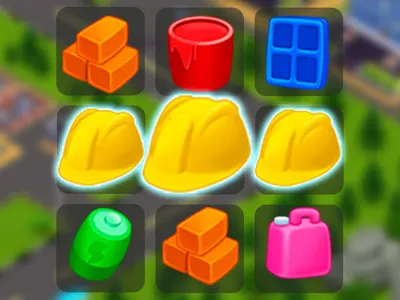 My Little City A match-3 game for would-be city planners: supply the materials and get the plots ready to build. Play My Little City
Where to go next
If you like a game that rewards planning over reflexes, the puzzle category and casual category have plenty more. Our guide to merge games covers another genre built on combining pieces.
Frequently asked questions
Should I always make the biggest match available?
Usually, but not always. If the level goal needs a particular item or a particular area of the board, a smaller match that serves the goal can be better than a large one that does not.
When should I use a booster?
Hold boosters until a level has stopped you at least once, then use them where they affect the most pieces or the ones your goal needs.
Is match-3 luck or skill?
Both. New pieces fall in randomly, but you control which matches you make and how you use your moves. Players who plan their combos tend to clear levels more reliably.